 22:42Oldies Music · Sad Songs That Make Us Cry
1960s Songs That Make You Cry Every Time
Episode: The 1960s Songs That Nobody Can Listen To Without Crying
From Sora Music Rewind · 23 min ·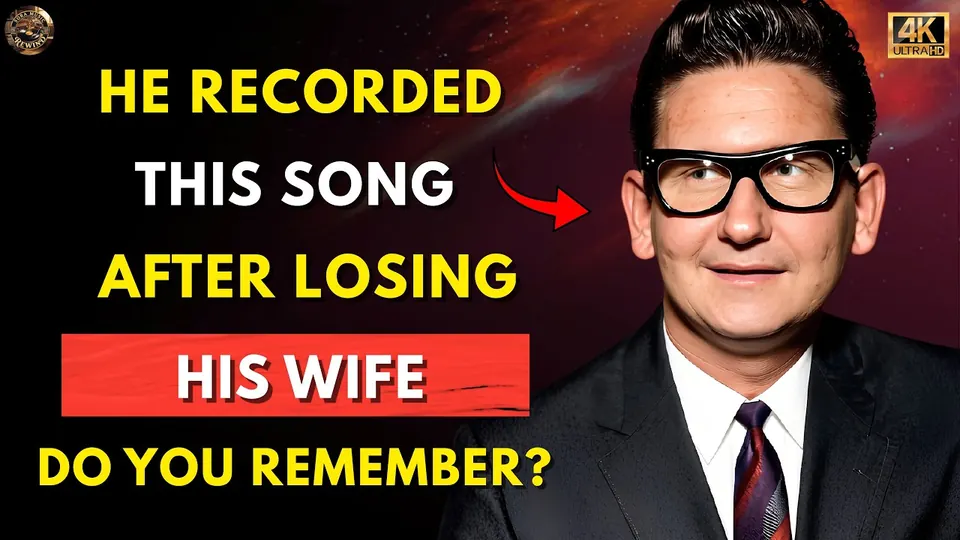
About These 1960s Songs That Make You Cry
These 1960s songs that make you cry are the kind nobody can listen to without crying, or at least without a lump in the throat.
This episode counts down ten of them. Here is the story behind each one.
The Countdown: 10 Songs From the 1960s That Still Bring Tears
#10: Yesterday — The Beatles (1965)
Paul McCartney woke up with this melody in his head in his room at the Wimpole Street home of Jane Asher's family in London. He was so sure it belonged to someone else that he kept asking around. Nobody claimed it.
While the words were missing, he sang it with the placeholder title "Scrambled Eggs." He finished the lyrics in Portugal. He recorded it alone with his guitar in June 1965, and a string quartet was added. No other Beatle played on it.
In America it spent four weeks at number one in the fall of 1965. Asked years later whether the song was about his mother, who died when he was 14, McCartney said he did not mean it to be, but it could be.
#9: Unchained Melody — The Righteous Brothers (1965)
The song was already ten years old. Alex North and Hy Zaret wrote it for Unchained, a 1955 prison film in which Todd Duncan sang it.
According to Bill Medley, he and Bobby Hatfield both wanted to sing it, and Hatfield won a coin toss. Medley produced the session himself. The record was meant to be the B-side of "Hung on You," but disc jockeys flipped it over, and it climbed to number four on the Billboard Hot 100.
In 1990 the movie Ghost brought it back, and the reissue spent four weeks at number one in Britain. Bobby Hatfield died in November 2003, shortly before a concert.
#8: I Can't Stop Loving You — Ray Charles (1962)
Don Gibson wrote this song and first released it in late 1957 as the B-side of "Oh Lonesome Me." Ray Charles, already a rhythm and blues star, chose it for a whole album of country songs, a move many thought was risky.
The result, Modern Sounds in Country and Western Music, produced by Sid Feller, wrapped it in strings and a choir. "I Can't Stop Loving You" spent five weeks at number one on the Hot 100 in 1962, also topped the R&B chart, and held number one in Britain for two weeks that July.
In March 1961, Charles had canceled a show in Augusta, Georgia, rather than play to a segregated audience, and was later fined for breaking the contract.
#7: Crying — Roy Orbison (1961)
By Roy Orbison's own account, the song began at a barber shop. He spotted a former girlfriend across the street and wanted to go talk to her, but his pride held him back, and he drove away scolding himself.
He wrote it with Joe Melson, and Fred Foster produced it at RCA Victor's Studio B in Nashville in June 1961. It peaked at number two on the Billboard Hot 100.
The song kept returning. Don McLean took it to number one in Britain in 1980, and Orbison's later duet with k.d. lang won a Grammy. Real grief came later: his wife Claudette died in 1966, and two of his sons died in a house fire in 1968.
#6: Wichita Lineman — Glen Campbell (1968)
Jimmy Webb was driving across the Oklahoma panhandle when he saw a lineman up on a telephone pole, talking into a phone. He turned that lonely figure into a man who hears the woman he misses in the wires.
Webb handed over the song thinking it was unfinished, without a third verse. Producer Al De Lory recorded it anyway. Carol Kaye played the famous bass line. It reached number three on the Hot 100 and number one on both the country and adult contemporary charts.
In June 2011, Campbell announced that he had Alzheimer's disease, then set out on a long goodbye tour. He died in August 2017.
#5: Honey — Bobby Goldsboro (1968)
In 2006, a CNN music writer called it the worst song of all time. Yet listeners felt differently: it sold a million copies in its first three weeks and spent five weeks at number one in the spring of 1968.
Bobby Russell wrote it, inspired by a tree in his front yard. Goldsboro cut his version on January 30, 1968, at RCA Studio B in Nashville, with Bob Montgomery producing.
The song is a list of small memories: a tree she planted, a little accident with the car, and then the day she is gone.
#4: Ruby, Don't Take Your Love to Town — Kenny Rogers and the First Edition (1969)
Mel Tillis wrote this song about a paralyzed veteran pleading with his wife not to go out for the night. Tillis said he had a World War II veteran in mind, though many listeners in the late 1960s heard it as a song about Vietnam.
Waylon Jennings and Johnny Darrell recorded it first. The First Edition cut their version in a single take in June 1968. Released in 1969, it reached number six on the Hot 100 and number two in Britain.
That year, NBC's Huntley-Brinkley Report ran a short closing segment in which the camera moved slowly around an empty bedroom while the record played.
The Top 3
The final three are revealed in the episode.
Watch the countdown to find out — or tap below to read them now.
#3: Abraham, Martin and John — Dion (1968)
Dick Holler wrote this song in 1968, shortly after Robert F. Kennedy was shot. The title names three men, but the song mourns four: Abraham Lincoln, Martin Luther King Jr., John F. Kennedy and Bobby Kennedy.
Phil Gernhard produced Dion's recording for Laurie Records. It reached number four on the Billboard Hot 100, went gold, and hit number one in Canada. Moms Mabley and Marvin Gaye later had hits with it too.
Dion knew something about sudden loss. In February 1959 he turned down a seat on the small plane carrying Buddy Holly, because the fare was about what his parents paid in rent for a month. That plane crashed, and no one aboard survived.
#2: (Sittin' On) The Dock of the Bay — Otis Redding (1968)
Otis Redding began writing this song in August 1967 on a rented houseboat in Sausalito, California, and finished it in Memphis with guitarist Steve Cropper. He recorded it at Stax on November 22, with more work on December 7.
On December 10, 1967, Redding's plane went down in Lake Monona near Madison, Wisconsin. He was 26. Four members of the Bar-Kays, their valet and the pilot also died; trumpeter Ben Cauley was the only survivor. More than 6,500 people came to his funeral in Macon, Georgia.
Cropper finished the mix afterward, adding the waves and seagulls Redding had asked for. In March 1968 the record began a four-week run at number one, the first posthumous number-one single in American history.
#1: A Change Is Gonna Come — Sam Cooke (1964)
On October 8, 1963, Sam Cooke and his group were turned away from a Holiday Inn in Shreveport, Louisiana. Later that night they were arrested for disturbing the peace.
Moved by that night, by Bob Dylan's "Blowin' in the Wind" and by the civil rights movement, he wrote this song and recorded it in Hollywood on January 30, 1964. Cooke sang it on The Tonight Show on February 7, 1964, but the tape was not kept.
On December 11, 1964, Sam Cooke was shot and killed at a Los Angeles motel. He was 33. The death was ruled a justifiable homicide, a finding his family has long disputed. Eleven days later the song came out as the B-side of "Shake." On election night in 2008, Barack Obama echoed it in his victory speech.
Why These Songs Still Make Grown Men Cry
Look at the list and you will notice how few of these songs are loud. A string quartet, a lonely bass line, a whistle at the end of a record. The sadness comes from small details and plain words.
That is why these 1960s songs that make you cry have lasted. They give us a safe place to miss someone.
Which of these ten songs do you still have to turn off halfway through, and who does it remind you of?
Sources and Further Reading
Topics in This Story
Your turn...
Which 1960s song still makes you emotional every time you hear it? Do you remember the first time you listened to it?
Tell us the story — fellow fans would love to hear it.
We check every fact — but if you spot a mistake, we'd love to know.Report a correction →