 22:42Oldies Music · Sad Songs That Make Us Cry
1950s Songs That Made Our Mothers Cry
Episode: 10 1950s Songs That Made Our Mothers Cry... and Still Make Us Cry Today
From Sora Music Rewind · 22 min ·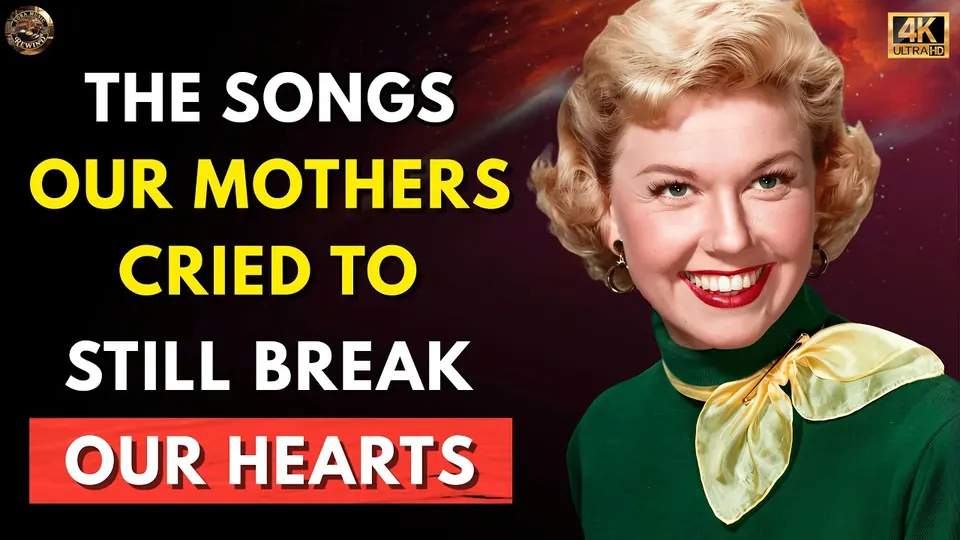
About These 1950s Songs That Make You Cry
The 1950s songs that make you cry were rarely loud about it. They were gentle ballads, slow waltzes and quiet hymns, the kind of records a mother might hum over the dishes and then go silent in the middle of a verse.
This episode counts down ten of them, from a movie theme built on a Civil War melody to a hymn written after a hospital stay. Here is the story behind each one, checked against chart records and published histories.
The Countdown: 10 Songs That Made Our Mothers Cry
#10: Love Me Tender — Elvis Presley (1956)
The tune is much older than rock and roll. It was adapted from "Aura Lea," a song published in 1861 and sung during the Civil War. Elvis recorded his version on August 24, 1956, for his first film.
The movie was first called The Reno Brothers. When advance orders for the single passed one million, 20th Century Fox renamed it Love Me Tender. The song reached number one on Billboard in the week ending November 3, 1956, before the film premiered at New York's Paramount Theatre on November 15.
Elvis's character, Clint Reno, dies at the end. Test audiences were upset, so the studio added a closing scene with Elvis singing one more verse. It was a way of letting fans say goodbye.
#9: Unchained Melody — Al Hibbler and Les Baxter (1955)
Alex North wrote the music and Hy Zaret wrote the words for Unchained, a 1955 prison film. The producer wanted the word "unchained" in the lyric. Zaret refused, and the song never uses it. Instead, he wrote about someone longing for a loved one after a long time apart.
In the film, Todd Duncan sang it. The song was nominated for an Academy Award but lost to "Love Is a Many-Splendored Thing."
Three versions reached the American top ten in 1955: Les Baxter's went to number one, Al Hibbler's reached number three, and Roy Hamilton's reached number six. In Britain, four versions sat in the top 20 at the same time, a record for any song.
#8: Que Sera, Sera — Doris Day (1956)
In Alfred Hitchcock's The Man Who Knew Too Much, Doris Day plays a mother whose young son has been kidnapped. At an embassy, she sits at the piano and sings as loudly as she can, hoping he will hear her. He whistles the tune back, and his father finds him.
Jay Livingston and Ray Evans wrote it. Livingston later recalled that Day did not want to record it and was pressured by the studio. She did it in one take.
Released in May 1956, it reached number two in America and number one in Britain. It won the Academy Award for Best Original Song, the writers' third Oscar, and became Doris Day's signature song.
#7: The Great Pretender — The Platters (1955)
Buck Ram, the Platters' manager and producer, had boasted to Mercury's Bob Shad that he had a song even better than "Only You." When Shad asked its name, Ram blurted out "The Great Pretender," and only then wrote it. He said it took about 20 minutes, in a washroom at the Flamingo Hotel in Las Vegas.
Tony Williams sang lead with a voice so smooth that the heartbreak sneaks up on you. The song is about a man smiling through his loneliness. It topped the Billboard R&B chart and reached number one on the pop chart in early 1956.
#6: Cry — Johnnie Ray (1951)
The song was written by Churchill Kohlman, who worked as a night watchman at a dry cleaning plant in Pittsburgh. Ruth Casey recorded it first, on a small label.
Johnnie Ray recorded his version with the Four Lads on October 16, 1951. It reached number one on Billboard in the issue dated December 29, 1951, and stayed there for eleven weeks. His emotional style earned him nicknames such as "The Prince of Wails" and "The Nabob of Sob."
When a man sang that close to tears on the radio, it gave listeners permission to feel their own sadness, too.
#5: Tammy — Debbie Reynolds (1957)
Livingston and Evans, the same pair behind "Que Sera, Sera," wrote this love theme for Tammy and the Bachelor. The Ames Brothers sang it over the opening titles, while Debbie Reynolds sang it in the film.
Her Coral Records single came out in June 1957, entered the Billboard charts on July 22, and went to number one for five weeks, earning her a gold record. It was nominated for the Oscar but lost to "All the Way."
In 1959, a young Berry Gordy wanted to call his new record label Tammy Records after the song. The name was taken, so he chose Tamla, one of the labels that grew into Motown.
#4: Tennessee Waltz — Patti Page (1950)
Near Christmas of 1946, Pee Wee King and Redd Stewart were driving to Nashville when Bill Monroe's "Kentucky Waltz" came on the radio. They decided Tennessee needed a waltz, too. Stewart wrote the words on a matchbox, set to a melody King already had.
Mercury first meant Patti Page's recording as the B-side of "Boogie Woogie Santa Claus." Her vocal was layered with her own voice, and the waltz caught on instead of the holiday side. It reached number one in December 1950 and stayed there for nine weeks.
A song about losing a sweetheart to an old friend on the dance floor became Tennessee's fourth official state song in 1965. It entered the Grammy Hall of Fame in 1998 and the National Recording Registry in 2024.
#3: Teen Angel — Mark Dinning (1959)
Jean Dinning, who had sung with the Dinning Sisters, wrote this song with her husband, Red Surrey, and her brother Mark recorded it. In the story, a car stalls on a railroad track. The young man pulls his girlfriend to safety, but she runs back for his class ring and is killed.
Some American stations banned it as too sad, and the BBC refused to play it. Still, after its release in October 1959, it climbed to number one on the Billboard Hot 100, replacing "Running Bear" on February 8, 1960, and staying two weeks.
#2: Smoke Gets in Your Eyes — The Platters (1958)
Jerome Kern first wrote this melody as a tap dance number for Show Boat in 1927, but it was not used. In 1933, he and lyricist Otto Harbach slowed it into a ballad for the Broadway musical Roberta, where Tamara Drasin introduced it.
The Platters recorded it in 1958. Kern's widow disliked their version and began legal action to stop it. She dropped the suit once she learned how well it was selling.
It was number one on the Billboard Hot 100 for three weeks, from January 19, 1959, and also reached number one in Britain that March.
#1: Crying in the Chapel — Darrell Glenn (1953)
Artie Glenn wrote this hymn after serious spinal surgery. According to his son Larry, he went to pray at the nearest chapel, the Loving Avenue Baptist Church in Fort Worth, and wept tears of joy. The song came to him soon after.
His son Darrell, still in high school, recorded it first with his father's band. Several publishers turned it down before Valley Records, a small Knoxville label, released it in May 1953. It reached number six on the pop chart, and by August versions by Rex Allen, June Valli and the Orioles were charting too.
Elvis Presley recorded it in October 1960, but it sat unreleased until April 1965. It then reached number three in America and number one in Britain, his first million seller since 1962.
Why These Sad Songs Still Matter
None of these records shouted for attention. A mother singing to a lost child, a waltz about a stolen sweetheart, a father's prayer after surgery: they were small stories told softly, and that is why they stayed.
They also arrived when families gathered around one radio or one record player. A song heard in the kitchen became part of the household, and often part of someone's private memories.
Which of these songs did your mother sing or hum, and do you still find yourself stopping to listen when it plays?
Sources and Further Reading
Topics in This Story
Your turn...
Do you remember all 10 songs? Which one brings tears to your eyes even today?
Tell us the story — fellow fans would love to hear it.
We check every fact — but if you spot a mistake, we'd love to know.Report a correction →