 22:42Oldies Music · Sad Songs That Make Us Cry
Sad Songs From 1968 That Still Break Our Hearts
Episode: 10 Songs From 1968 That Still Break Our Hearts... Do You Remember Them All?
From Sora Music Rewind · 24 min ·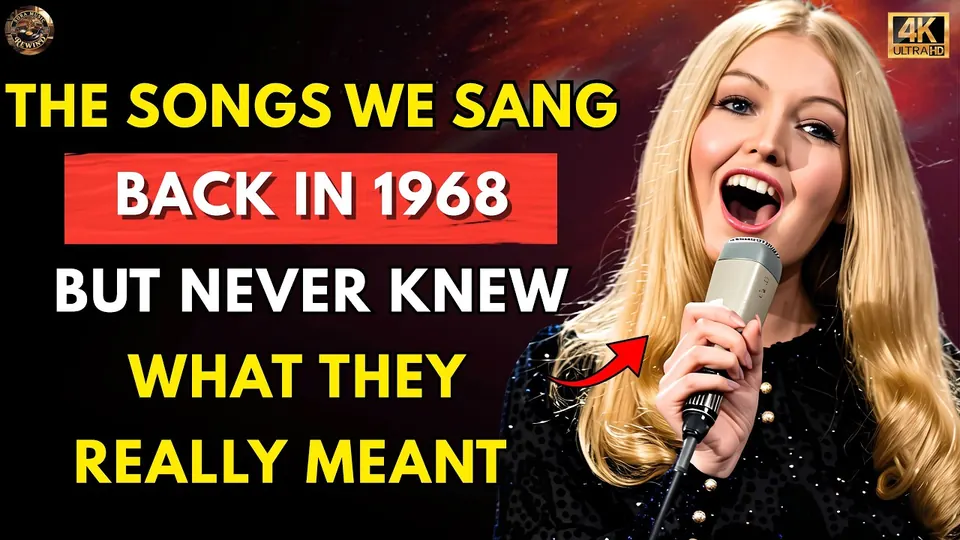
About These Sad Songs From 1968
The sad songs from 1968 arrived in a year that gave Americans plenty to grieve. Martin Luther King Jr. was killed in April, Robert Kennedy in June, and the evening news was full of war and unrest.
This episode counts down ten records from that year. Each story below was checked against chart records and reliable accounts.
The Countdown: 10 Sad Songs From 1968 That Still Break Our Hearts
#10: Hey Jude — The Beatles (1968)
In June 1968, Paul McCartney drove to Weybridge to visit five-year-old Julian Lennon, whose parents had just separated. On the way he began a song to comfort the boy. It started as "Hey Jules."
The Beatles recorded it at Trident Studios in London with a 36-piece orchestra. When the players were asked to clap and sing along on the coda, all but one agreed.
It reached American stores on August 26, 1968, the day the Democratic convention opened in Chicago. It spent nine weeks at No. 1, tying the Hot 100 record. In 1996, Julian bought Paul's recording notes at auction. His manager said Julian had "a few photographs of his father, but not very much else."
#9: Those Were the Days — Mary Hopkin (1968)
In May 1968, Welsh teenager Mary Hopkin won the TV talent show Opportunity Knocks. The model Twiggy saw her and told Paul McCartney. By Hopkin's account, a telegram from Apple Records sat on the shelf for days until her mother made her phone.
Paul had heard this old Russian romance, with English words by Gene Raskin, at a London club. Balalaika, clarinet and cimbalom make it sound like a happy tavern night, while the words mourn a youth that is gone.
Sandie Shaw released a rival version that fell short. Hopkin's single replaced "Hey Jude" at No. 1 in Britain and reached No. 2 in America, where only "Hey Jude" stood above it.
#8: I Heard It Through the Grapevine — Marvin Gaye (1968)
Norman Whitfield and Barrett Strong wrote this song in 1966. The Miracles recorded it first, but Motown boss Berry Gordy vetoed it as a single. Marvin Gaye cut his version in early 1967, and Gordy blocked that one too.
Gladys Knight & the Pips took a funkier version to No. 2 in late 1967. Marvin's recording went onto his 1968 album In the Groove, and disc jockeys found it. Gordy later said the DJs played it so much that Motown had to release it.
It hit No. 1 that December and stayed seven weeks, becoming Motown's biggest hit up to that time. Marvin sings like a man trying hard not to believe what he has heard.
#7: Wichita Lineman — Glen Campbell (1968)
Glen Campbell asked Jimmy Webb for another song about a place. Webb remembered seeing a lineman on a telephone pole in the Oklahoma panhandle and wrote this, setting it in Wichita, Kansas. He sent a demo labeled unfinished, with no third verse or bridge.
"When I heard it I cried," Campbell said, because it made him homesick. Carol Kaye played the opening bass notes, and Campbell filled the missing section with a bass solo.
It reached No. 3 pop and No. 1 country. Campbell announced in 2011 that he had Alzheimer's disease, made a farewell tour with his children in the band, and died in 2017 at 81.
#6: Honey — Bobby Goldsboro (1968)
Bobby Russell wrote "Honey" after noticing how big a tree in his yard had grown. Bob Shane, formerly of the Kingston Trio, released it first, but it barely charted. Bobby Goldsboro, once a guitarist in Roy Orbison's band, recorded it in January 1968, and his first take was released.
A young husband remembers his wife, and only in the last verse do we learn she has died. It sold a million copies in three weeks and was certified gold on April 4, 1968, the day Dr. King was killed. It then spent five weeks at No. 1.
In 2006, a CNN writer called it the worst song of all time. Grieving listeners never cared.
#5: MacArthur Park — Richard Harris (1968)
Comedians have joked for decades about the cake left out in the rain. Yet Jimmy Webb said the song came from real life. He and Susie Horton met for lunch in MacArthur Park in Los Angeles, across from her office, until the romance ended. "There's nothing in it that's fabricated," Webb said in 2014.
The Association turned the song down. Then actor Richard Harris, fresh from Camelot, sent Webb a telegram asking him to come to London and make a record. "MacArthur Park" was the last song Webb played for him.
Recorded in Hollywood and released in April 1968, it ran over seven minutes and still climbed to No. 2.
#4: Both Sides, Now — Judy Collins (1968)
Joni Mitchell was reading Saul Bellow's Henderson the Rain King on a plane. The hero looks down at clouds, so she put down the book, looked out her own window, and started writing.
Judy Collins recorded the first commercial version. Released as a single in October 1968, it reached No. 8 and won her a Grammy. Mitchell herself never liked that recording.
In 2000, Mitchell recorded it again with an orchestra, her voice deeper with age. That version plays in a tearful scene with Emma Thompson in Love Actually. After a brain aneurysm in 2015, she returned to the stage at the 2022 Newport Folk Festival, at 78, and sang it there.
#3: Dream a Little Dream of Me — Mama Cass with the Mamas & the Papas (1968)
This song was first recorded in 1931. The Mamas & the Papas cut it as the group was coming apart, with Cass Elliot on lead. She said she tried to sing it "like it was 1943," as if it were brand new. It reached No. 12 in America and No. 1 in Australia.
In July 1974, Cass closed two weeks at the London Palladium to a standing ovation. Michelle Phillips has said Cass phoned her, crying from happiness. The next night, Cass died in her sleep at 32 of a heart attack. Her daughter, Owen, was seven, and later wrote a book about her, My Mama, Cass.
#2: Abraham, Martin and John — Dion (1968)
Dick Holler wrote this song in St. Petersburg, Florida, shortly after hearing that Robert Kennedy had died. He had co-written "Snoopy vs. the Red Baron" two years earlier. Now he honored Lincoln, Dr. King, John Kennedy and Bobby.
Dion, the teen idol behind "Runaround Sue," had battled heroin for years. In April 1968 he got clean and went back to Laurie Records, which offered a contract on one condition: record this song. It reached No. 4, topped the Canadian chart and sold a million copies.
#1: (Sittin' On) The Dock of the Bay — Otis Redding (1968)
In August 1967, Otis Redding stayed on a houseboat in Sausalito and began writing about watching the ships roll in. Steve Cropper helped him finish it in Memphis.
Redding recorded it in late 1967 and considered it unfinished. On December 10, three days after his last session on it, his plane crashed into Lake Monona in Wisconsin. He was 26. Four young members of the Bar-Kays, all teenagers, died with him.
Cropper mixed the song afterward, adding the seagulls and waves Otis had wanted. In March 1968 it became the first posthumous No. 1 in Hot 100 history. That closing whistle still sounds like a man expecting tomorrow.
Why Sad Songs From 1968 Still Speak to Us
So many of these records grew out of someone caring for someone else. A friend wrote a song for a lonely boy. A producer finished a song for a friend who never came home. A songwriter turned national grief into a hymn.
They lasted because they told the truth about loss in plain, gentle words.
How These Songs Carried a Hard Year
Several climbed the charts in the shadow of the year's worst headlines. "Honey" went gold the day Dr. King died. "Abraham, Martin and John" followed Robert Kennedy's death. "Hey Jude" reached stores as protests filled Chicago's streets.
Which of these songs still brings back someone you miss, and where were you when you first heard it?
Sources and Further Reading
Topics in This Story
Your turn...
Which song takes you right back — and where were you when you first heard it?
Tell us the story — fellow fans would love to hear it.
We check every fact — but if you spot a mistake, we'd love to know.Report a correction →
More Sad Songs That Make Us Cry Stories
22:42Oldies Music · Sad Songs That Make Us Cry 21:41Oldies Music · 1950s · Sad Songs That Make Us Cry
1950s Songs That Made Our Mothers Cry
 17:21Oldies Music · Sad Songs That Make Us Cry