 22:32Oldies Music · 1960s · Sad Songs That Make Us Cry
1960s Sing-Along Songs You Can't Help Singing
Episode: 10 Catchiest 1960s Songs You Just Can't Help Singing Along To
From Sora Music Rewind · 23 min ·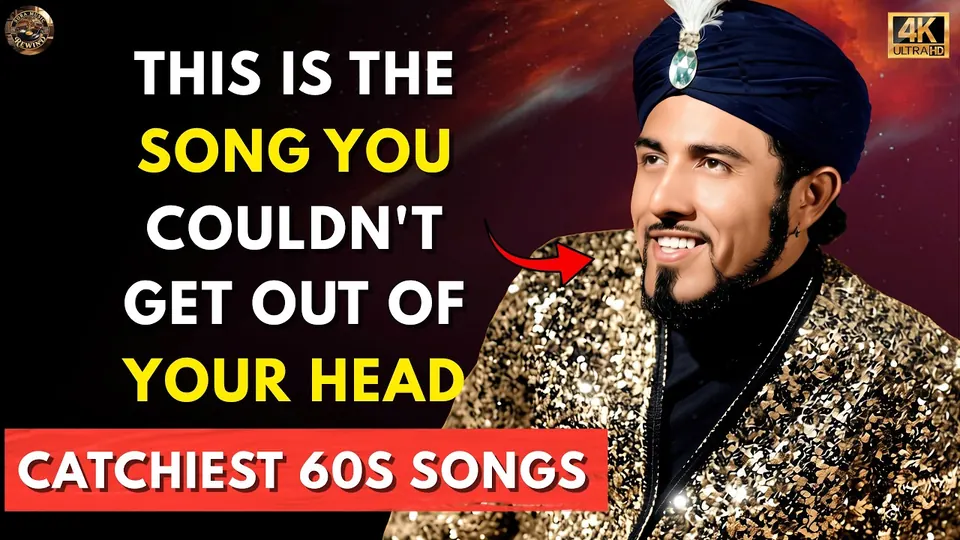
About These 1960s Sing-Along Songs
1960s sing-along songs have a way of taking over before we even notice. One plays in a grocery store or at a ballgame, and suddenly the words come back on their own, decades after we last heard them.
This episode counts down ten of the catchiest records of the decade. Here is the story behind each one, checked against chart records and reliable accounts.
The Countdown: 10 Catchiest 1960s Songs
#10: Hey Jude — The Beatles (1968)
In June 1968, a month after John Lennon separated from his wife, Cynthia, Paul McCartney drove out to visit her and their five-year-old son, Julian. Cynthia recalled that Paul worked out the song in the car on the way. It began as "Hey Jules," a few words of comfort for the boy, and Paul changed the name to "Jude" because it sang better.
The master was recorded at Trident Studios on eight-track equipment, and a 36-piece orchestra added over the long ending was asked to clap and sing along. At about seven minutes, the record worried George Martin, but Lennon said radio would play it "if it's us." "Hey Jude" spent nine weeks at number one in America.
#9: Sweet Caroline — Neil Diamond (1969)
Neil Diamond gave more than one account of this song. In a 2007 interview, he said a magazine photo of a young Caroline Kennedy on a horse, with her parents, had given him the image. That same year he sang it for her at her 50th birthday celebration.
In 2014, Diamond offered a different explanation: the song was really about his wife at the time, Marcia Murphey, and he needed a three-syllable name to fit the melody. Both stories come from Diamond himself.
The single reached number four on the Hot 100 in August 1969. Today it belongs to baseball fans as much as to Diamond. It has been played at Fenway Park in Boston since at least 1997, and in the middle of the eighth inning at every Red Sox home game since 2002.
#8: Brown Eyed Girl — Van Morrison (1967)
Van Morrison, then 21 and recently out of the Belfast band Them, recorded this song in New York in late March 1967 with producer Bert Berns. Al Gorgoni played the bright electric lead guitar.
The working title was "Brown-Skinned Girl." Morrison changed it during the session and later said, "That was just a mistake." The record reached number ten on the Hot 100. Morrison has never warmed to it, and he has said he never received royalties for it because of a contract he signed without legal advice.
#7: Twist and Shout — The Beatles (1963)
On February 11, 1963, the Beatles spent a long day at EMI Studios in London recording most of their first album, Please Please Me. John Lennon had arrived with a bad cold and was getting by on throat lozenges.
"Twist and Shout," written by Phil Medley and Bert Berns, was saved for last, around 10 p.m. The Isley Brothers had taken it to number 17 in 1962. Lennon tore through it in one take. A second attempt was abandoned because his voice had nothing left. He later said the song "nearly killed me."
Released in America in March 1964, it climbed to number two on Billboard, held off only by the Beatles' own "Can't Buy Me Love." It asks for no special skill, just a deep breath and a shout.
#6: Be My Baby — The Ronettes (1963)
Phil Spector recorded this song on July 29, 1963, at Gold Star Studios in Hollywood, with the house musicians later known as the Wrecking Crew. Drummer Hal Blaine played the famous opening beat. He said it came out of a mistake that he simply kept.
Ronnie Bennett, still a teenager, was the only Ronette on the record. The song reached number two on the Hot 100. Brian Wilson first heard it on his car radio and pulled over to study the chorus.
Ronnie married Spector in 1968 and, by her own account in a 1990 memoir, endured years of control before leaving in 1972. Ronnie Spector died in January 2022 at age 78.
#5: Sugar, Sugar — The Archies (1969)
The Archies were cartoon characters from Archie Comics and their Saturday morning TV show. The real voices belonged to studio professionals: lead singer Ron Dante, with Toni Wine and Andy Kim, multitracked to sound like a whole group.
Jeff Barry and Andy Kim wrote the song, and Barry produced it. It reached number one in September 1969 and stayed four weeks, and Billboard named it the top song of the year.
#4: Louie Louie — The Kingsmen (1963)
Richard Berry wrote "Louie Louie" in 1956 and released it in 1957. On April 6, 1963, a group of Portland, Oregon, teenagers called the Kingsmen recorded it at a local studio for somewhere between $36 and $50, by various estimates.
The engineer hung the studio's only microphone high above singer Jack Ely, who had to stand on his toes to be heard over the band. After one partial take and one full take, they were done, and the words came out famously garbled.
The record spent six weeks at number two on the Hot 100, kept from the top by the Singing Nun's "Dominique" and Bobby Vinton's "There! I've Said It Again." Indiana Governor Matthew Welsh asked for a ban, and the FBI investigated for 31 months before concluding it was unable to interpret any of the wording.
The Top 3
The final three are revealed in the episode.
Watch the countdown to find out — or tap below to read them now.
#3: Wooly Bully — Sam the Sham and the Pharaohs (1965)
Domingo Samudio, who performed as Sam the Sham, recorded this song in Memphis at Sam C. Phillips Recording Studio, with Stan Kesler producing. The count-in, in a mix of Spanish and English, was improvised on the spot. In the lyric, the "Wooly Bully" is a strange creature, and nobody seemed to mind not knowing what it was.
The record reached number two in June 1965, kept from the top by "Help Me, Rhonda" and "Back in My Arms Again." Yet Billboard named it the number-one song of 1965. It was the first time a record that never topped the weekly chart took the year-end crown.
#2: Surfin' Bird — The Trashmen (1963)
The Trashmen came from Minneapolis, Minnesota, a long way from any surf. They combined two songs by the vocal group the Rivingtons, "Papa-Oom-Mow-Mow" and "The Bird's the Word," into one wild number.
Drummer and singer Steve Wahrer ad-libbed the frantic middle section the first time the band played it live. Recorded in 1963, it reached number four on the Hot 100.
Wahrer was first credited as the writer, but the credit went to the Rivingtons after they threatened to sue. Decades later the song turned up in the film Full Metal Jacket (1987) and on Family Guy (2008), stealing the scene each time.
#1: I Want Candy — The Strangeloves (1965)
The Strangeloves were introduced as three Australian brothers, Giles, Miles and Niles Strange, who had supposedly grown rich on a sheep farm. None of it was true. They were Bob Feldman, Jerry Goldstein and Richard Gottehrer, a New York songwriting and production team behind the Angels' 1963 hit "My Boyfriend's Back."
They chose Australia because they did not think they could fake British accents. The three wrote "I Want Candy" with Bert Berns, built on the stomping Bo Diddley beat.
It reached number 11 on the Hot 100, the lowest peak on this list, and may have the best story. The brothers were invented, but the fun of shouting that chorus was real.
Why These Songs Are So Hard Not to Sing
Look at what these records have in common. Most have a chorus anyone can shout, a few words repeated, or a sound so simple that no singing talent is needed.
Several were made quickly and roughly: one take with a failing voice, a garbled vocal under a single microphone, a count-in made up on the spot. Those rough edges made them feel like they belonged to everyone.
That is why 1960s sing-along songs still fill ballparks, wedding receptions and kitchens today, long after the original records stopped spinning.
Which of these songs can you still sing every word of, and where did you first learn it?
Sources and Further Reading
Topics in This Story
Your turn...
Which song takes you right back — and where were you when you first heard it?
Tell us the story — fellow fans would love to hear it.
We check every fact — but if you spot a mistake, we'd love to know.Report a correction →
More Stories Behind the Songs Stories
22:32Oldies Music · 1960s · Sad Songs That Make Us Cry 25:18Oldies Music · Stories Behind the Songs
Love Songs That Were Never About Love
 27:48Oldies Music · Stories Behind the Songs