 21:38Oldies Music · 1966 · Greatest Hits by Year
Summer Hits of 1973 That Ruled the Radio
Episode: 10 Summer Hits from 1973 That Ruled the Radio... Do You Remember Them All?
From Sora Music Rewind · 23 min ·This episode plays on YouTube — the button opens it in a new tab.
About These Summer Hits of 1973
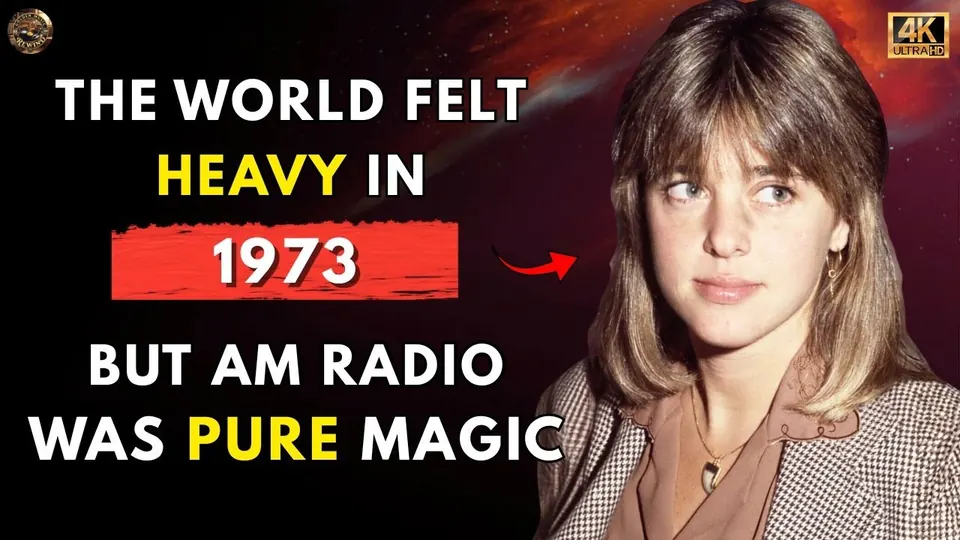
The summer hits of 1973 came from all over: a former Beatle's love ballad, a folk singer's barroom tale, a spliced-together rock instrumental and a wave of glam rock from Britain. Some ruled American AM radio, while others were far bigger in Britain and Europe than they ever were in the United States.
This episode counts down ten of them. The chart positions and stories below were checked against reliable sources, and where the video got a detail wrong, it has been corrected.
The Countdown: 10 Songs From the Summer of 1973
#10: My Love — Paul McCartney and Wings (1973)
Paul McCartney wrote this piano ballad for his wife, Linda. Wings recorded it live with a 50-piece orchestra at Abbey Road in January 1973, during the sessions for Red Rose Speedway.
The guitar solo was a happy surprise. McCartney had written one, but Henry McCullough asked to try something else just before a take, and his improvised solo made the record. McCartney later said it came "right out of the blue."
"My Love" spent four weeks at No. 1 on the Hot 100 that spring and early summer. After Linda died in 1998, a string arrangement of it was played at her memorial services in London and New York.
#9: Bad, Bad Leroy Brown — Jim Croce (1973)
Jim Croce based his tough-guy character on a man he met during his brief Army service at Fort Dix, New Jersey. As Croce told it, the fellow went AWOL and then came back at the end of the month to collect his paycheck, which got him arrested.
The song reached No. 1 on the Hot 100 in July 1973 and held it for two weeks, Croce's only No. 1 during his lifetime. On September 20, 1973, he died in a plane crash in Natchitoches, Louisiana, at 30. "Leroy Brown" is reported to be the last song he sang in public.
A letter Croce had written to his wife, Ingrid, reached her after his death. In it, he said he had decided to quit music, write short stories and film scripts instead, and step back from public life.
#8: Frankenstein — The Edgar Winter Group (1973)
This instrumental grew out of a loose studio jam once called "The Double Drum Song." To make it fit on a single, the band cut the long recording into pieces and spliced the best sections back together.
Drummer Chuck Ruff looked at all that tape and named the result after the stitched-together monster. Rick Derringer produced it. The track first appeared as the B-side of "Hangin' Around," but listeners flooded disc jockeys with calls, and the label flipped the sides. It topped the Hot 100 for one week in May 1973 and sold over a million copies.
#7: Delta Dawn — Helen Reddy (1973)
Alex Harvey and Larry Collins wrote "Delta Dawn." Harvey said it came from memories of his mother, who was from the Mississippi Delta and died in a car accident. After what he described as a vision of her years later, he wrote the song, calling it "a gift to my mother and an apology to her."
Tanya Tucker first took it into the country Top 10 in 1972, when she was only 13. Bette Midler recorded it too. Helen Reddy's version, produced by Tom Catalano, reached No. 1 on the Hot 100 on September 15, 1973, just as summer ended. It also began a run of six straight Easy Listening No. 1s for her. Reddy died in 2020.
#6: Get Down — Gilbert O'Sullivan (1973)
Plenty of listeners assumed this was a man scolding his dog. It is actually about a girl, whose behavior the singer compares to a dog jumping up on him, hence "get down."
The tune began as a piano warm-up, and O'Sullivan released it as a change from his more wistful ballads. It spent two weeks at No. 1 in Britain in April 1973 and climbed to No. 7 on the Hot 100 that August.
#5: Goodbye My Love, Goodbye — Demis Roussos (1973)
Greek singer Demis Roussos had been part of the progressive rock band Aphrodite's Child before going solo. This tender ballad was written by Leo Leandros, who also produced it, and Klaus Munro.
It never became an American hit, but it went to No. 1 in West Germany, Switzerland, Belgium and Spain, and reached No. 2 in Austria and the Netherlands. With his big voice and flowing caftans, Roussos became one of Europe's best-loved stars. He died in 2015.
#4: Can the Can — Suzi Quatro (1973)
Suzi Quatro grew up in Detroit and played in the all-female band the Pleasure Seekers before moving to Britain to work with producer Mickie Most. There she teamed with songwriters Nicky Chinn and Mike Chapman, who wrote and produced this stomping glam single.
"Can the Can" reached No. 1 in Britain in June 1973 and also topped the charts in Australia, Germany and Switzerland. In America it did not chart until 1976, peaking at No. 56. Many Americans came to know her later as Leather Tuscadero on Happy Days.
#3: Hell Raiser — Sweet (1973)
On Sweet's early Chinn-Chapman hits, session musicians played the instruments while the four members only sang. That changed with "Wig-Wam Bam" in 1972, the first of those singles played entirely by the band.
"Hell Raiser," released in May 1973, peaked at No. 2 in Britain. The next single, "The Ballroom Blitz," also stopped at No. 2, and so did "Teenage Rampage" early in 1974. "The Ballroom Blitz" was inspired by a 1973 show in Kilmarnock, Scotland, where the band was bottled off the stage.
#2: Skweeze Me, Pleeze Me — Slade (1973)
Slade loved bad spelling, and this title is a fine example. Bassist Jim Lea got the idea for the chorus after watching local pianist Reg Kierle play at The Trumpet, the band's regular pub in Bilston, England.
Oddly enough, the band recorded it at A&M Studios in Los Angeles while touring America, with Chas Chandler producing. Released on June 22, 1973, it sold about 300,000 copies in its first week and entered the British chart at No. 1. That made Slade the first act to enter at No. 1 with back-to-back singles.
#1: The Free Electric Band — Albert Hammond (1973)
Albert Hammond, born in London and raised in Gibraltar, wrote this with his longtime partner Mike Hazlewood and produced it himself. It tells of a young man who turns away from the comfortable life his parents planned in order to play in a band.
In America it peaked at only No. 48, and it reached No. 19 in Britain. Across Europe it did much better, going to No. 1 in Norway and Sweden, No. 3 in the Netherlands and No. 4 in West Germany. Years later, his son Albert Hammond Jr. became a guitarist in the Strokes.
Why the Summer of 1973 Still Sounds So Good
Look at the variety here. A ballad, a story song, an instrumental, country-gospel, piano pop and glam rock all shared the same season. Radio programmers in 1973 played whatever caught listeners' ears.
The stories behind them are just as varied: a solo nobody planned, a B-side that got flipped, a pub piano player, and a farewell letter that arrived too late. Those are the details that make familiar songs feel new again.
Which of these songs takes you straight back to the summer of 1973, and where were you when you heard it on the radio?
Sources and Further Reading
Topics in This Story
Your turn...
Which song takes you right back — and where were you when you first heard it?
Tell us the story — fellow fans would love to hear it.
We check every fact — but if you spot a mistake, we'd love to know.Report a correction →
More Greatest Hits by Year Stories
21:38Oldies Music · 1966 · Greatest Hits by Year 19:33Oldies Music · 1967 · Greatest Hits by Year
Forgotten Hits of 1967 You Forgot You Knew
 25:16Oldies Music · 1969 · Greatest Hits by Year