 25:18Oldies Music · Stories Behind the Songs
Badfinger: The Song That Became a Cautionary Tale
Episode: The Song that Turned Badfinger into a Cautionary Tale
From Sora Music Rewind · 16 min ·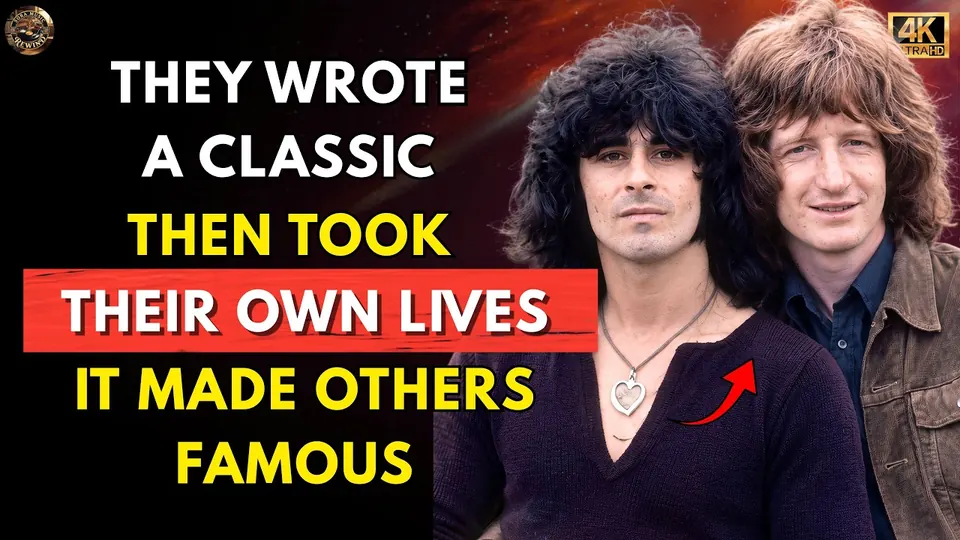
What Is the Badfinger Story?
The Badfinger story is one of the saddest in rock history: a gifted band, a song the whole world came to love, and a business arrangement that left its writers with almost nothing. It began with real promise. A group from Wales was signed by the Beatles' own record label and was soon writing hits of its own.
It is also a story about two friends, Pete Ham and Tom Evans, who wrote "Without You" together and did not live to see the full rewards of it. This article follows the episode's story, checked against reliable sources. Where the facts differed from the video, we followed the record, and we have left out details that could not be confirmed.
How Badfinger Rose, and How It Fell Apart
From the Iveys to Apple Records
The band began in Swansea, Wales, as the Iveys. On July 23, 1968, Apple Records signed them, making them one of the first acts on the Beatles' new label.
Paul McCartney wrote and produced "Come and Get It" for them in 1969, for the film The Magic Christian. In December 1969 the group became Badfinger, a name suggested by Apple's Neil Aspinall. "Come and Get It" reached No. 7 in America and No. 4 in Britain.
The band's own songs followed. "No Matter What" (1970), "Day After Day" (1971) and "Baby Blue" (1972) all became American hits, and Pete Ham wrote all three.
Two Unfinished Songs Become "Without You"
Pete Ham had a song called "If It's Love," but he was unhappy with its chorus. Tom Evans had a song called "I Can't Live," inspired by his relationship with Marianne, the woman he later married. The two joined Ham's verse to Evans's chorus.
Badfinger recorded the result at Abbey Road in July 1970, and it closed side one of the album No Dice. Both writers later said they did not think it had much potential, and the band never released it as a single.
Others heard more in it. When Harry Nilsson came across the record at a party, he mistook it for the Beatles. His version went to No. 1 in both America and Britain in early 1972. That same year, Ham and Evans received an Ivor Novello Award for the song.
The Manager and the Missing Money
In November 1970, Badfinger signed a business management contract with Stan Polley, a New York businessman. Under his arrangements, the band's income from touring, recording and publishing flowed into companies he controlled. Polley's other clients over the years included Al Kooper and Lou Christie.
In 1972, Polley negotiated a new deal with Warner Bros. Records, reported at $3 million. The advances were supposed to be held in an escrow account. Evans had grown suspicious of Polley's handling of things, but the band signed anyway.
When Warner's publishing arm could not locate the escrow money, it sued Polley on December 10, 1974. Badfinger's new album, Wish You Were Here, had been out since October. Warner stopped promoting it after seven weeks and pulled it from distribution, and the band was left without income.
The Loss of Pete Ham
On April 23, 1975, Pete Ham received a phone call from the United States telling him the band's money was gone. He spent that evening at a local pub with Tom Evans, his friend since their early days in the band, and Evans drove him home in the early hours.
Pete Ham died by suicide on April 24, 1975, at his home in Woking, Surrey. He was 27, three days short of his 28th birthday. He left a note that blamed Stan Polley for his despair. His partner, Anne, was expecting their child, and his daughter, Petera, was born about a month later.
In May 1975, Warner ended its contract with the band, and Badfinger dissolved.
Tom Evans Carries On
Evans and guitarist Joey Molland later revived Badfinger for two albums, Airwaves in 1979 and Say No More in 1981. Neither restored the band's fortunes, and the two men soon fell out. In 1982 and 1983, they led rival touring bands, each using the Badfinger name.
On November 18, 1983, Evans and Molland argued by phone about past escrow income and the royalties from "Without You," which Molland and others wanted to share. Tom Evans died by suicide the next day, November 19, 1983, at his home. He was 36, and he left his wife, Marianne, and their son, Stephen.
Who Was Stan Polley, and What Happened to Him?
Warner's lawsuit dragged on for about four years. In late 1978, Polley paid what was described as a "substantial sum" back to the company, though by one account he managed to keep about half of an earlier $100,000 escrow payment.
His only conviction came years later, in a case that had nothing to do with the band. In 1991, Polley pleaded no contest in Riverside County, California, to charges of misappropriating funds and money laundering. An aeronautics engineer named Peter Brock said Polley had cost him $250,000 in a failed airplane engine venture. Polley received five years' probation and was ordered to repay the money, which Brock said never came. Stan Polley died on July 20, 2009, in Rancho Mirage, California, at 87.
Why "Without You" Never Stopped Playing
The song went on without its writers. More than 180 artists have recorded it. In 1994, Mariah Carey's version reached No. 3 on the Billboard Hot 100 and spent four weeks at No. 1 in Britain. Royalties to Pete Ham's estate reportedly rose to about $500,000 that year.
The question of who should share in those royalties lasted for decades. In 1995, Molland and drummer Mike Gibbins accepted an ASCAP award for the song, which upset the Ham and Evans families. In 2000, Ham's partner, Evans's widow and surviving band members were in court over unpaid royalties. The matter was finally resolved in court by 2013.
What remains is the music. "No Matter What," "Day After Day" and "Baby Blue" still turn up on classic rock radio, and "Without You" is still sung and recorded around the world. Behind every performance are two young songwriters from a small band who deserved far better.
Do you remember where you were the first time you heard "Without You," and did you know back then who had written it?
Sources and Further Reading
Topics in This Story
Your turn...
Which song takes you right back — and where were you when you first heard it?
Tell us the story — fellow fans would love to hear it.
We check every fact — but if you spot a mistake, we'd love to know.Report a correction →